AI writes up to 90% of code in Chinese tech companies. Developers are already facing layoffs.
AI in Alibaba, Tencent, ByteDance, development automation, layoffs, impact on programmers, new engineering responsibilities

In certain teams at Alibaba, Tencent, and ByteDance, the share of code created with the help of AI is approaching 90%, and sometimes even exceeds it.
Tencent. Half of all new code is already being created using AI
One of the most striking examples is Tencent, the developer of WeChat and one of the world's largest gaming publishers.
According to company data published for 2025, more than 90% of its engineers used their own tool, CodeBuddy. At the same time, about half of all new software code was created using artificial intelligence.
AI also participated in approximately 94% of code review procedures. The company reported an increase in R&D efficiency of more than 20%.
In June 2026, Tencent management stated that artificial intelligence is already generating the majority of the company's code. However, public information does not allow for an independent determination of the exact share of self-generated code that is accepted without fixes.
It is important to distinguish between these metrics. Using AI to write a program does not mean that the system independently developed, tested, and released the finished product.
Alibaba, Baidu, and ByteDance are accelerating automation
Alibaba is also actively implementing automated development tools. In 2025, the company's chairman, Joe Tsai, estimated the share of code created with the help of AI to be approximately 30%.
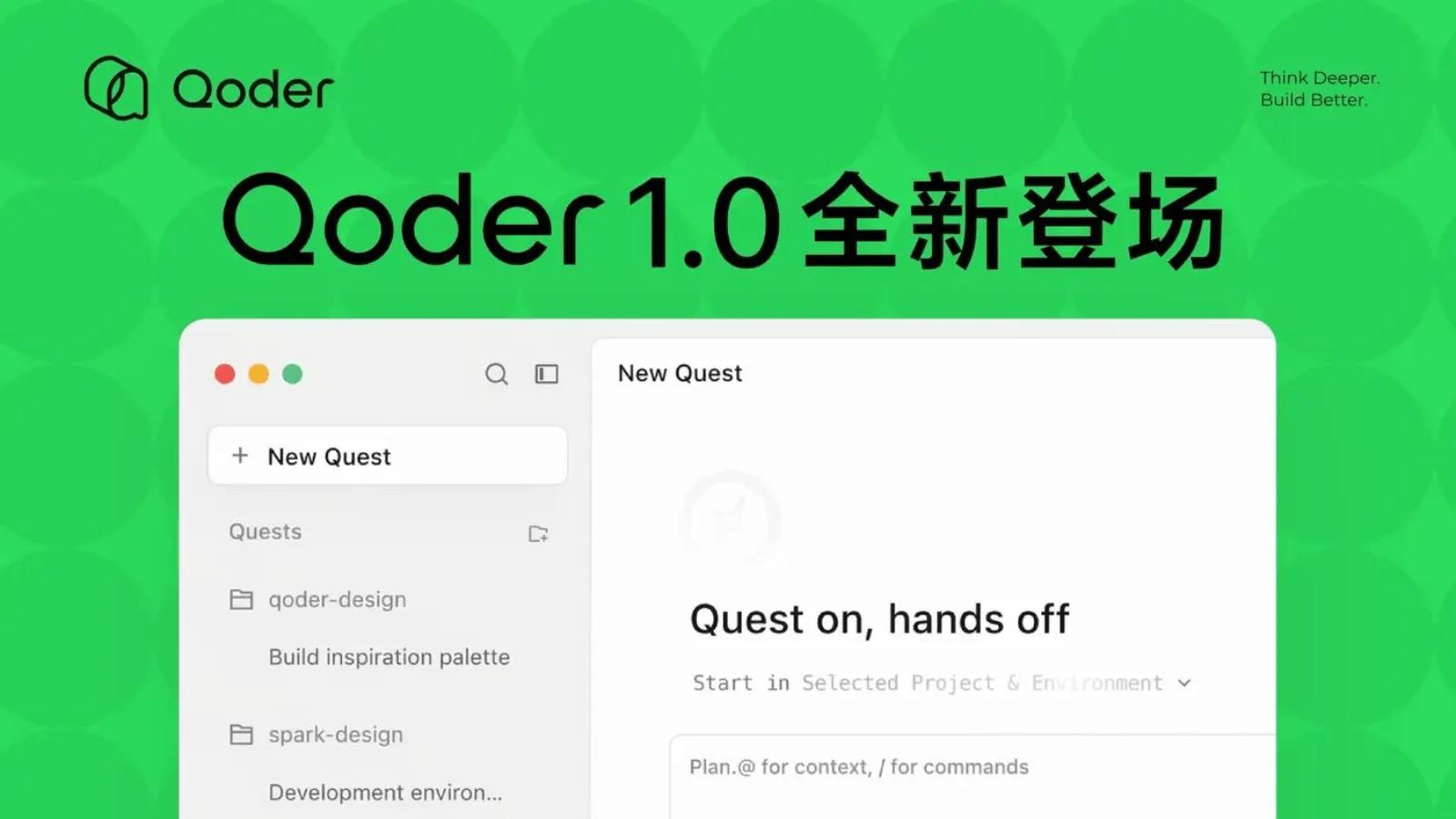
In Alibaba's cloud division, the figure approached 40%. The company is developing its own platform, Qoder, which focuses on programming using AI agents.
Baidu reported that the share of code generated by artificial intelligence reached 43%.
ByteDance, the owner of TikTok, is developing the Trae tool. In some of the company's teams, automatic generation rates exceeded 90%.
However, corporate metrics vary. Some companies measure the number of generated lines, others track the use of AI tools, and others evaluate the share of tasks completed by agents.
Therefore, it is incorrect to compare these figures directly.
The developer is turning into an AI agent manager
Automation is changing not only the speed of coding but the very organization of engineering work.
Previously, developers spent most of their time implementing features, fixing bugs, and writing tests themselves. Now, more and more of these operations are being performed by specialized agents.
AI is capable of simultaneously studying a repository, creating new modules, running tests, and suggesting fixes.
However, complex systems require an understanding of service interactions, security, performance, and the implications of architectural decisions.
This is precisely why an increase in the share of automatically created code does not necessarily mean a proportional increase in the productivity of the entire team.
In July 2026, published ByteDance data showed that with an automatic generation share of over 90%, productivity in terms of completed requirements grew by approximately 60%.
The difference is explained by the fact that writing code is only one stage of development.
Layoffs have already begun, but AI is not the only reason
In 2026, Reuters reported a gradual reduction in employees and contractors in Chinese tech companies amid the active implementation of artificial intelligence.
Some employers reduced their hiring of young specialists and handed over tasks previously performed by individual employees to automated systems.
According to Rest of World, Alibaba reduced its total headcount for 2025 by approximately 34%, while Baidu ended the year with a staff reduction of nearly 7%.
However, these changes cannot be fully explained by programming automation.
Headcount is also affected by business restructuring, economic slowdown, changes in consumer demand, and the reallocation of investments into cloud technologies.
Moreover, Tencent increased its headcount by approximately 5% during the same period.
Chinese companies are simultaneously cutting certain categories of jobs and hiring specialists in artificial intelligence, infrastructure, and autonomous agents.
Automation has revealed a new problem: the cost of tokens
The mass adoption of AI tools creates additional expenses that are not always accounted for in productivity assessments.
In September 2026, the South China Morning Post reported that Alibaba, Tencent, Baidu, and ByteDance began limiting the amount of computing power available to employees for working with AI.
Some divisions are introducing token limits, and employees must seek approval to use expensive models.
This changes the economics of automated development.
If an agent generates thousands of lines of code, repeatedly verifies results, and uses expensive models, its work can consume significant computing resources.
Therefore, companies must evaluate not only the amount of automatically written code but also the cost of solving a task, the quality of the result, and the costs of subsequent maintenance.
What will happen to the programming profession?
The Chinese experience shows that artificial intelligence has already become a mass tool for industrial development.
But the data does not yet confirm the disappearance of the programming profession or the transition of the entire country to fully autonomous software creation.
The distribution of responsibilities is changing.
Routine coding is increasingly being performed by machines. Humans are responsible for task definition, architecture, security, verifying solutions, and working with complex systems.
The primary metric of efficiency is gradually becoming not the number of lines written by a developer, but the ability of a team to release high-quality software products with lower costs.
Chinese tech companies are already testing this model in practice. And it is the results of such experiments that will show how far development automation can go.
If you are interested in the topics of AI, technology, and the future—welcome to my channel to discuss and share updates.
Translated from Russian. Original on vc.ru: ИИ пишет до 90% кода в китайских технологических компаниях. Программисты уже столкнулись с сокращениями.