IBM Unveils Quantum Nighthawk r3: 520 Qubits on a Single Chip, Aiming for Over 1,000 in a Unified System by 2027
IBM Nighthawk r3 quantum processor, 520 programmable qubits, new architecture, chip interconnects, high performance, quantum computing

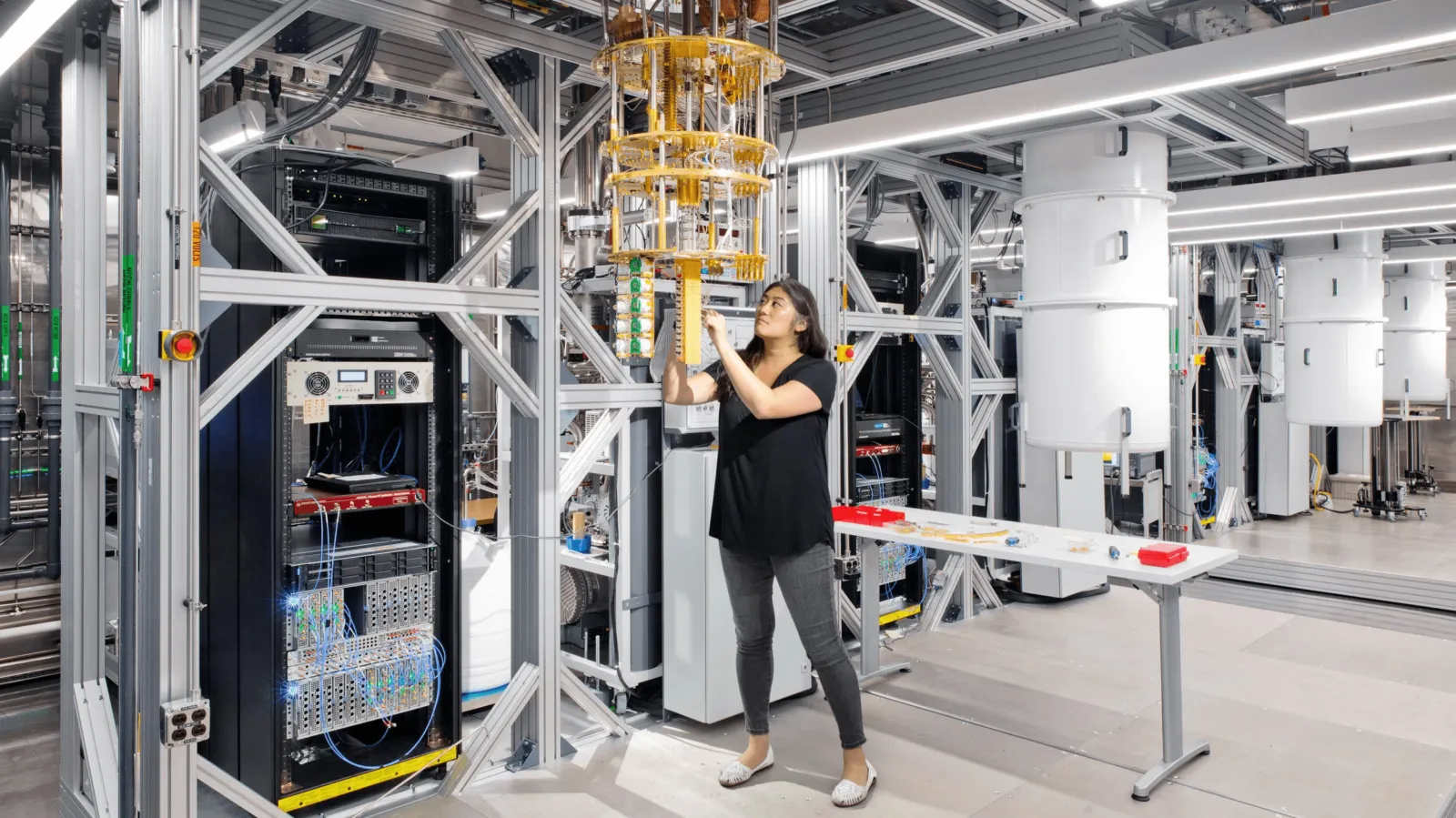
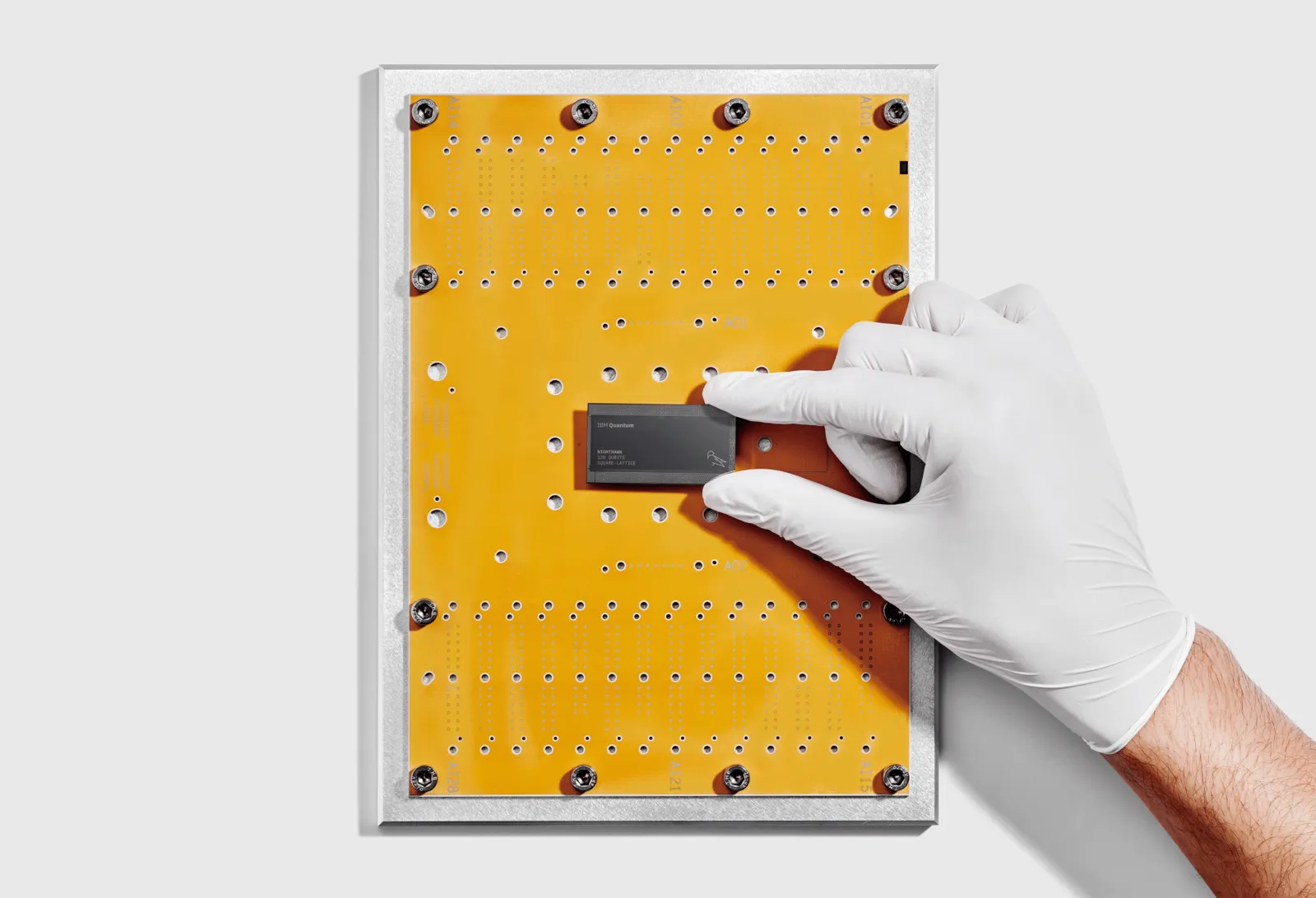
In 2027, the company plans to combine two such processors into a 1,040-qubit system. However, the main innovation lies not so much in the qubit count, but in the new architecture that allows quantum chips to be interconnected, enabling the gradual construction of more powerful computing systems.
On November 11, 2026, IBM presented its updated quantum computing roadmap at the annual IBM Quantum Developer Conference. The centerpiece of the announcement was the Nighthawk r3, the third generation of the superconducting quantum processor family, designed to execute complex quantum circuits with high speed and precision.
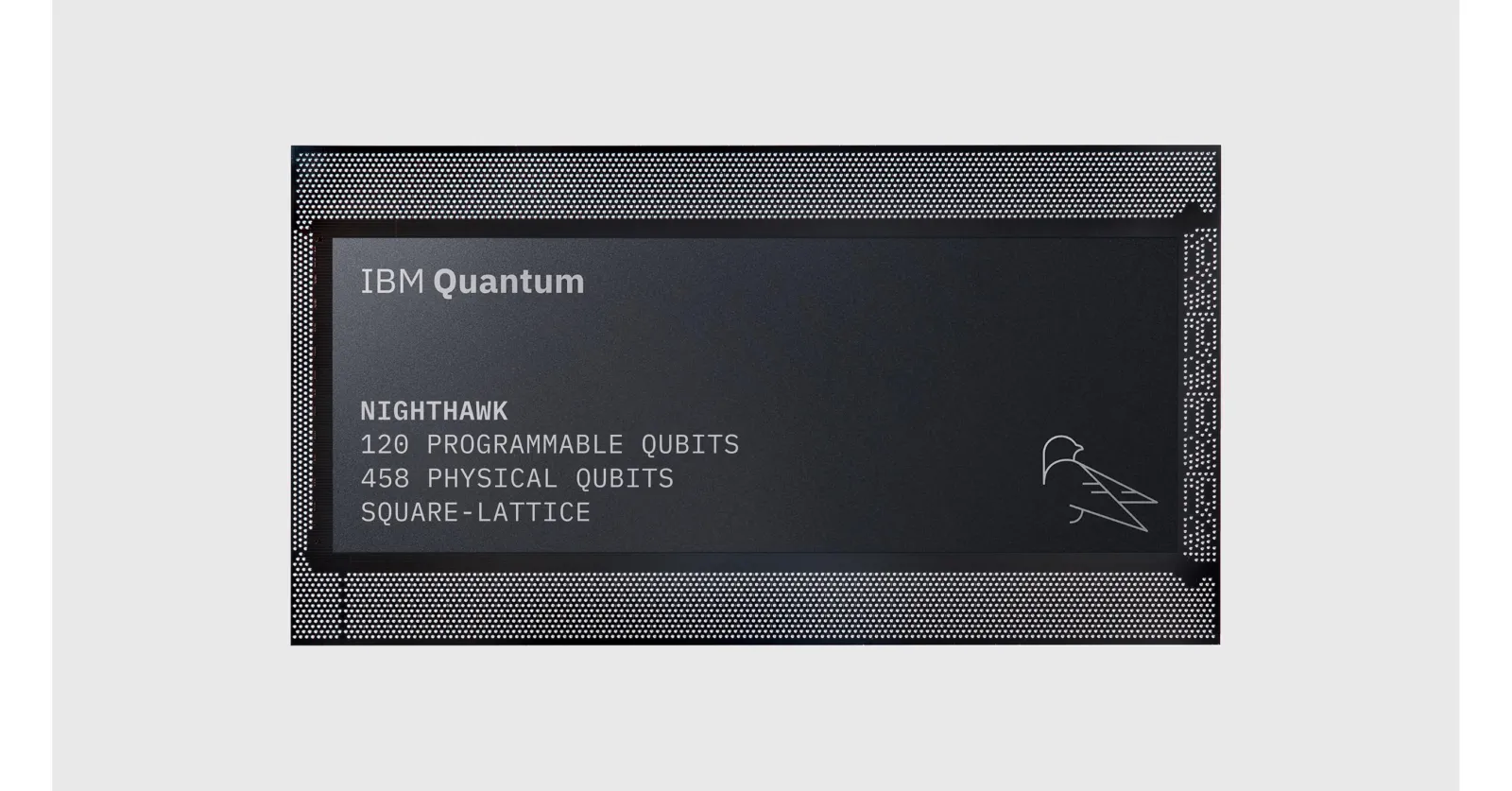
The new processor is expected to feature 520 programmable qubits, with a total of 2<0xE2><0x80><0x89>034 physical qubits on the die. According to IBM's roadmap, it will be capable of executing quantum circuits with a depth of up to 10,000 operations. For comparison, the current Nighthawk r2 supports 120 programmable qubits and over 7,500 operations.
That said, the Nighthawk r3 is not yet available as a mass-produced processor. IBM has unveiled its architecture and target specifications, with plans to create a system composed of two such chips by 2027.
Why 520 Qubits Matters More Than You Think
A qubit is the fundamental building block of a quantum computer. Unlike a classical bit, which can be either zero or one, a quantum bit can exist in a superposition of states. When multiple qubits interact, it becomes possible to leverage quantum effects to solve specific classes of computational problems.
However, the common claim that a quantum computer simply processes all possible options simultaneously is a massive oversimplification of how it works. Quantum algorithms use superposition, entanglement, and the interference of probability amplitudes to increase the likelihood of obtaining the correct result upon measurement.
Increasing the number of qubits expands the state space available to the computing system. But the practical value of such an increase depends on gate fidelity, noise levels, qubit connectivity, and the ability to implement error correction.
This is precisely why IBM is focusing not just on qubit count, but on circuit depth. The more sequential operations a system can perform before accumulated errors render the results unreliable, the more complex the algorithms it can explore.
2,034 Physical Qubits, but Only 520 are Programmable
One of the most interesting features of the Nighthawk r3 is the distinction between the total number of physical qubits and the number of programmable ones.
According to IBM, the processor will contain 2,034 physical qubits, but only 520 are intended for executing user-defined quantum circuits. The remaining physical elements are necessary for the architecture, including mechanisms for rapid state reset.
This is a crucial distinction, as the number of physical qubits alone does not characterize a system's useful computational power. Furthermore, the Nighthawk r3's programmable qubits should not be confused with fully protected logical qubits that utilize full-scale quantum error correction.
Transitioning from physical to reliable logical qubits remains one of the industry's central engineering challenges. Protecting quantum information requires using additional physical elements and constantly detecting errors that arise during computation.
Therefore, a system with a thousand programmable qubits does not yet signify the arrival of a universal, fault-tolerant quantum computer.
IBM to Link Two Quantum Processors into a Single System
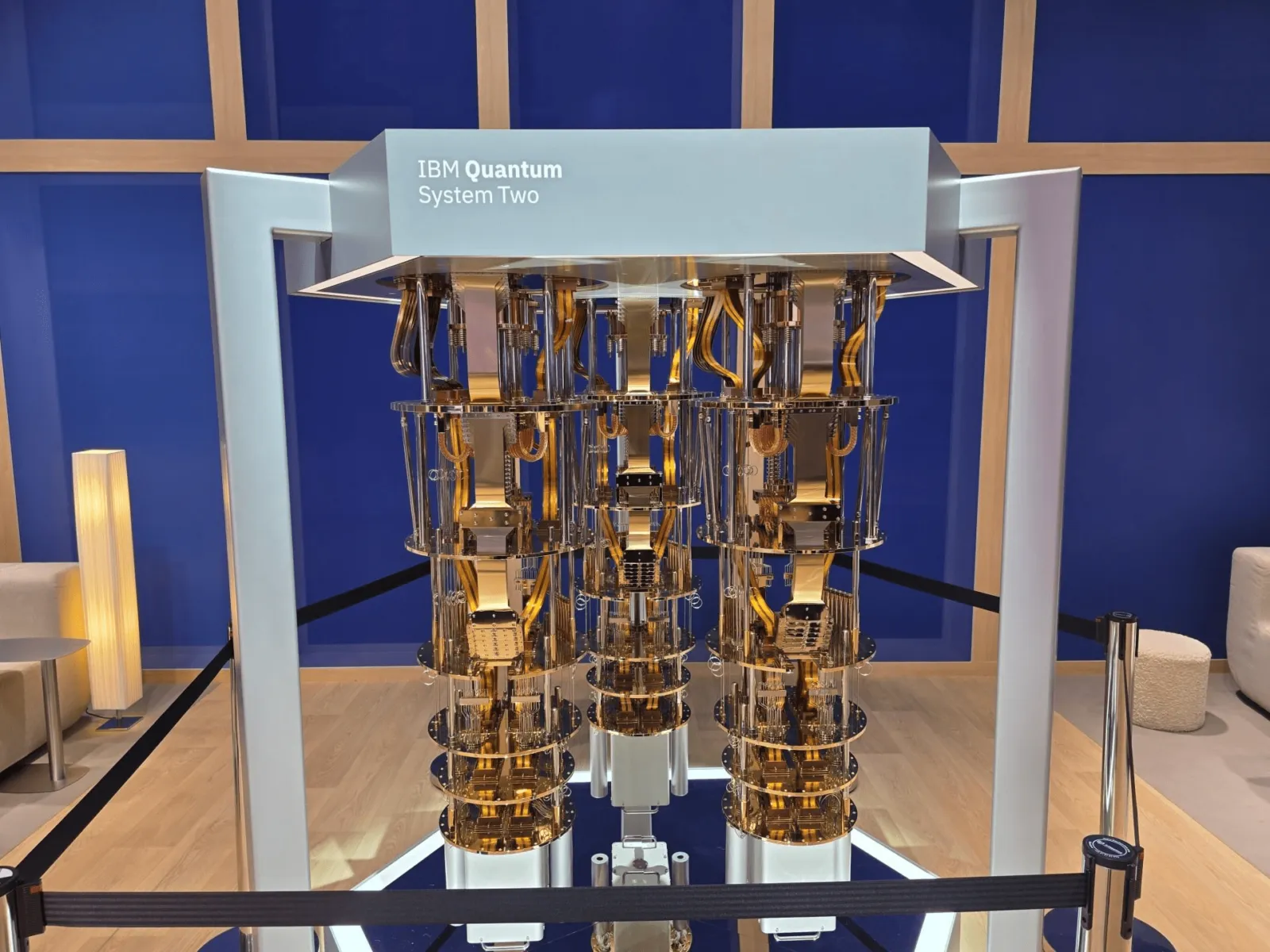
The key technology for the Nighthawk r3 will be specialized inter-chip connections that IBM calls l-couplers. These allow quantum states to be transferred between processors, forming a larger computing system.
The new processor will feature ten such connections. By 2027, IBM expects to combine two Nighthawk r3 chips to create a system with 1,040 programmable qubits.
This approach is reminiscent of the evolution of classical multi-processor computers, though quantum architecture is technically much more complex. In conventional computing, inter-processor communication has long been a standard operation. In quantum computers, however, one must transfer extremely sensitive states while maintaining coherence and minimizing errors.
IBM has already demonstrated the connection of two Nighthawk r1 processors using four l-couplers. In that experiment, the quantum state transfer fidelity reached 99.3%. The company's next goal is 99.9%.
The difference between these figures may seem small, but when performing thousands of operations, even a fraction of a percent in error can significantly impact the reliability of the computation.
Quantum Computing at Temperatures Below 15 Millikelvins
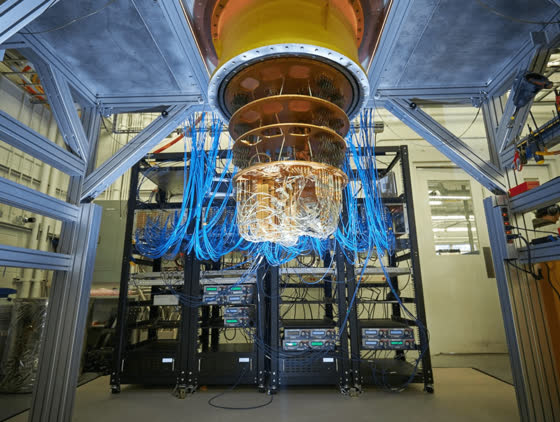
IBM's quantum processors use superconducting circuits that require extremely low temperatures to function. The hardware is cooled to a few thousandths of a degree above absolute zero.
In 2026, IBM demonstrated the integration of two cryogenic modules into a single system. The experimental setup reached temperatures below 15 millikelvins, and the cooling process took less than five days.
This achievement is directly relevant to the future scaling of quantum computers. As the number of qubits increases, so do the requirements for cooling, electrical interconnects, and signal management.
If every new processor requires entirely separate infrastructure, the cost and complexity of the system could grow too rapidly. A modular architecture allows for the search for more efficient ways to combine computing components.
Therefore, developing cryogenic infrastructure is just as vital for IBM as developing the quantum chips themselves.
The Current Nighthawk r2 is Already Showing Up to 19x Speedups
Alongside its 2027 plans, IBM presented results from using the existing Nighthawk r2 processor. The company reported that its customers and research partners, including E.ON, Algorithmiq, and Q-CTRL, have executed over 34 billion quantum circuits on it.
In certain workloads, performance was up to 19 times higher than on previous IBM quantum processors. The Nighthability r2 is capable of processing up to 100,000 quantum circuit measurements per second, which is particularly important for algorithms that require many repeated computations.
In one experiment, E.ON achieved a fifteen-fold speedup in a quantum machine learning algorithm for power grid tasks. In a collaborative effort between IBM and Oak Ridge National Laboratory, the simulation time for magnetic materials was reduced twelvefold.
However, these metrics represent a comparison with previous IBM processors. They do not mean that a quantum computer has become 19 times faster than the best classical supercomputers on the same tasks.
This is a fundamental distinction. Quantum advantage must be evaluated relative to the most efficient known classical algorithms, not just relative to the previous generation of quantum hardware.
Quantum Computers Will Work Alongside Supercomputers
Another key part of IBM's strategy involves integrating quantum computing with traditional high-performance systems.
Modern quantum algorithms often require significant amounts of classical computation. Standard CPUs and GPUs are used for task preparation, parameter optimization, measurement analysis, and error mitigation.
As a result, IBM is developing the Quantum Platform as a unified environment where quantum processors can work alongside classical computing resources. Users will be able to combine quantum tasks with local computers, cloud infrastructure, and supercomputers.
The company is also collaborating with AMD and Oak Ridge National Laboratory. As part of a joint research platform, the Nighthawk quantum processor will be co-located with the Umbra supercomputing system, which utilizes AMD Instinct MI355X accelerators and fifth-generation AMD EPYC processors.
This approach reflects the likely architecture of future data centers. A quantum processor won't necessarily replace a classical computer; rather, it will become a specialized accelerator for specific tasks, much like how GPUs are used for AI and scientific computing.
What tasks can thousand-qubit systems solve?
Potential applications for quantum computing include molecular modeling, materials science research, quantum chemistry, and specific optimization problems.
Simulating quantum systems is considered particularly promising. It can be extremely difficult for classical computers to accurately calculate the behavior of a large number of interacting quantum particles. Quantum processors could potentially perform some of these calculations more naturally.
In chemistry, this could help investigate molecular reactions and properties. In materials science, quantum algorithms are viewed as a tool for studying superconductors, magnetic materials, and new compounds.
However, achieving practical advantages requires more than just hundreds or thousands of qubits; it requires sufficient computational fidelity and algorithms that truly outperform classical methods.
Therefore, IBM isn't claiming that the Nighthawk r3 will automatically make quantum computing useful for all the industries mentioned. The processor is viewed as the next step in scaling the technology.
What's next: the path to a fault-tolerant quantum computer
IBM continues to develop two interconnected lines of quantum systems. The Nighthawk family focuses on increasing the computing power available to researchers, while a separate program, IBM Quantum Starling, is aimed at creating a fault-tolerant quantum computer.
According to the current roadmap, the company expects to create Starling by 2029. Such a system is intended to use quantum error correction to perform long-duration computations with significantly higher reliability.
Nighthawk r3 plays a vital role in this strategy by allowing for the testing of scaling technologies, chip-to-chip interconnects, and the management of large qubit counts.
However, many engineering challenges remain between the experimental connection of two processors and a full-scale fault-tolerant system. Further error reduction, improved precision in inter-chip operations, and the development of control infrastructure will be required.
If you are interested in AI, technology, and the future—welcome to my channel to discuss and share updates.
Translated from Russian. Original on vc.ru: IBM представила Quantum Nighthawk r3: 520 кубитов на одном чипе и более 1000 в единой системе к 2027 году