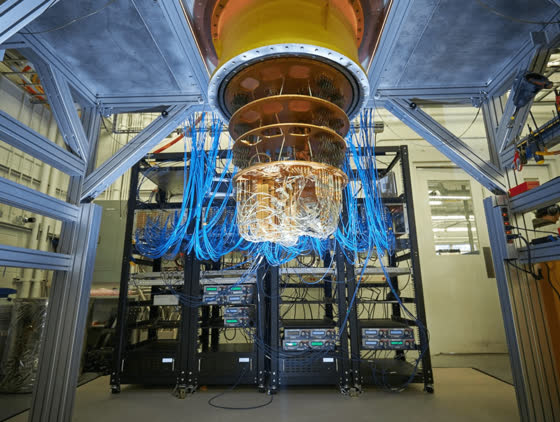
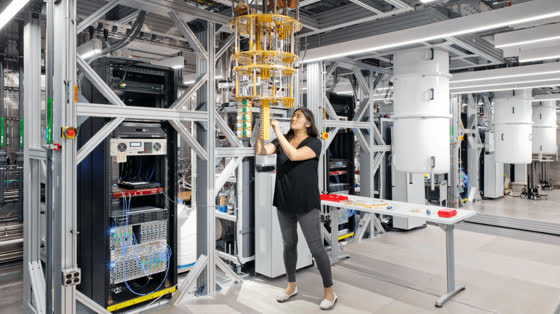
Google has learned how to "grow" quantum states. Errors have decreased 40-fold!
Google has introduced a method for growing magic states that reduces error rates, achieving 99.99% accuracy—a major milestone in quantum computing.

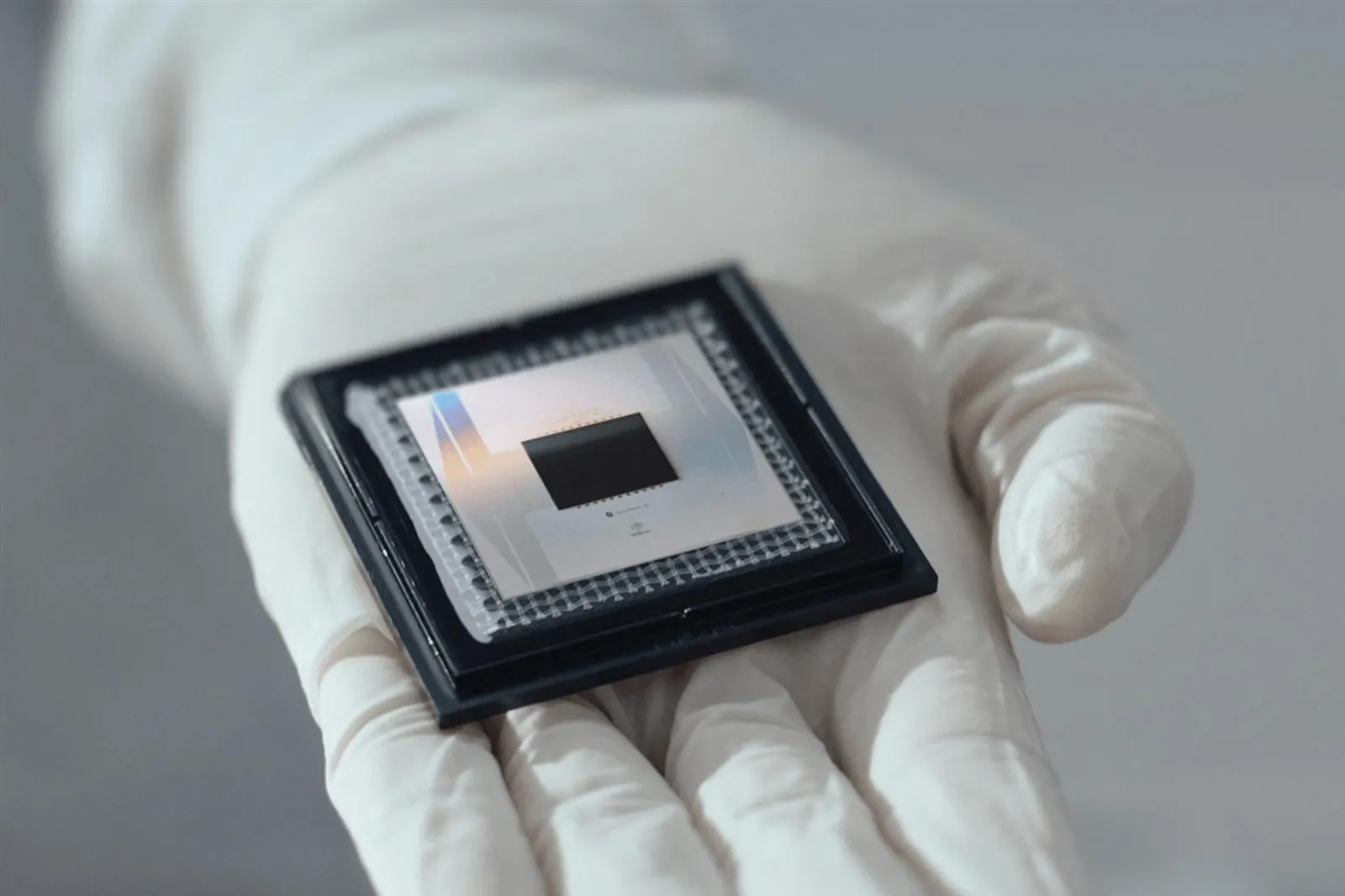
The company's researchers demonstrated a magic state cultivation technology on the Willow processor that reduces the probability of errors during preparation by approximately 40 times. The resulting states achieved a logical fidelity of 99.99%.
The results were published on October 15, 2026, in the journal Science. The experiment serves as the first practical validation of a technology proposed by Google specialists back in 2024.
The key achievement lies not in increasing the number of qubits, but in a more efficient use of existing quantum hardware.
Why quantum computers need magic states
Quantum computers use qubits which, unlike classical bits, can exist in a superposition of states. This allows certain types of computations to be performed fundamentally differently than on classical processors.
However, quantum information is extremely sensitive to external influences. Even tiny temperature fluctuations, electromagnetic interference, or imperfections in control signals can lead to errors.
To solve this, researchers are developing quantum error correction methods. They group multiple physical qubits into logical qubits, which can preserve information much more reliably.
But this introduces a new complexity.
Some operations necessary for universal quantum computing are difficult to implement directly within protected logical qubits. These require special resource states known as magic states.
Preparing them using traditional methods is extremely costly. According to estimates cited by Google, producing such states could potentially consume up to 95% of a future quantum computer's computational resources.
How Google managed to reduce the error rate
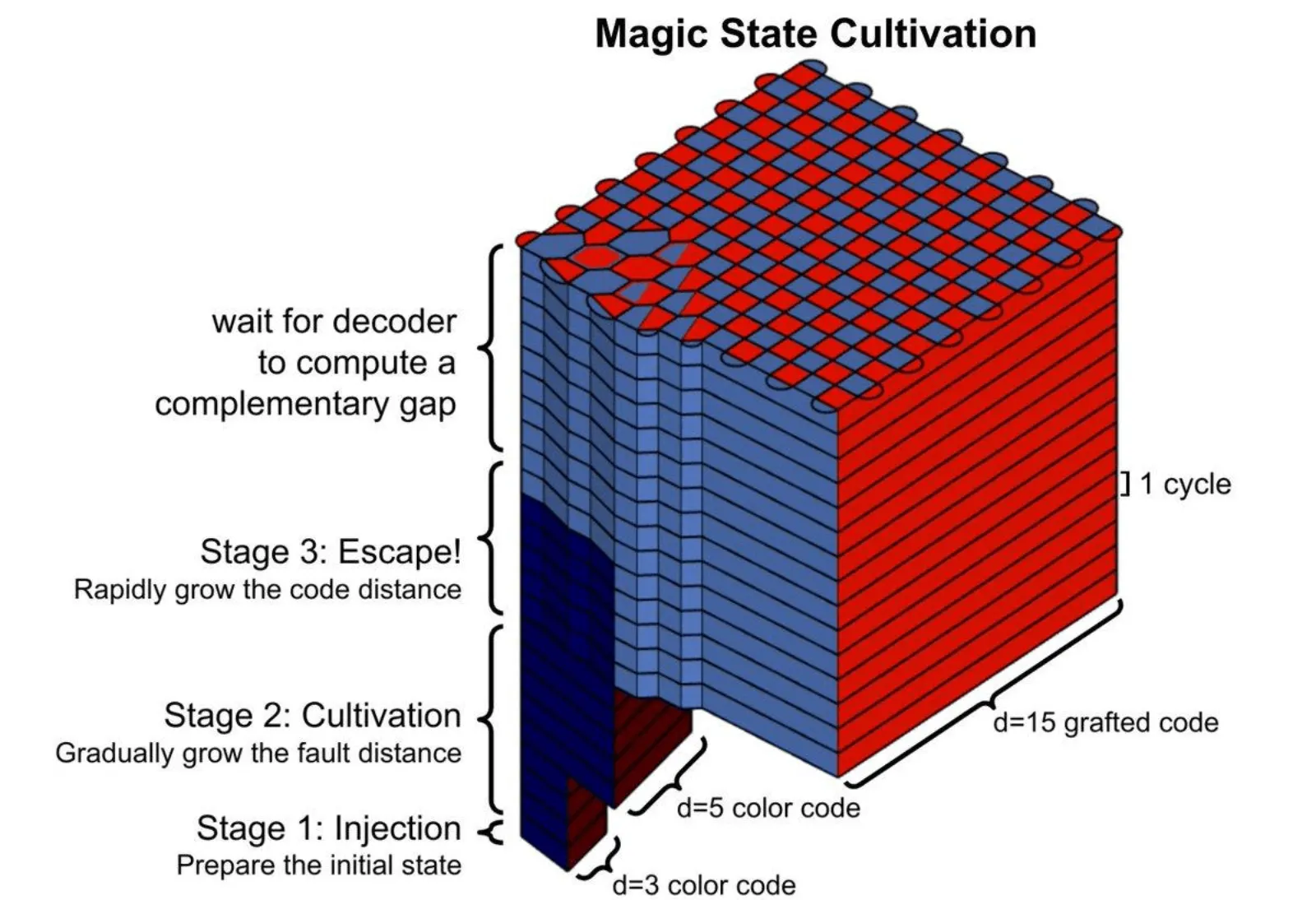
Researchers applied a method called magic state cultivation.
Instead of preparing a large number of imperfect states and then purifying them, the system starts with a single state encoded in a small group of physical qubits.
Then, a sequence of checks is performed to detect errors. If a check identifies a problem, the corresponding attempt is discarded. If the state passes the control, it continues to be processed, increasing its reliability.
The experiment utilized a quantum error correction code known as the color code.
Without cultivation, the error probability of a prepared state was approximately 0.44%. After applying the method, it dropped to approximately 0.01%.
Thus, the researchers achieved roughly a fortyfold improvement.
However, this high precision came at the cost of the success rate. In the final measurement protocol, only about 8% of the runs were retained. The rest were discarded during the verification process.
This is a significant limitation, as a practical quantum computer needs to not only create accurate states but also do so quickly and in large quantities.
The most difficult part turned out to be unexpected
During the experiments, researchers encountered results that initially appeared physically implausible.
After several months of testing, it turned out that electronic instability and temperature changes were affecting the measurements. These factors created noise that distorted the quality assessment of the prepared states.
The team improved the hardware control and developed a new measurement method that uses the cultivation process itself to verify the result.
This allowed for a more reliable assessment of the extremely low error probability.
Furthermore, the specialists demonstrated the ability to transfer a prepared state from a distance-3 color code to a distance-5 surface code.
Such a transition is important because surface codes are considered one of the primary methods for protecting information in future large-scale quantum computers.
Why this could change the economics of quantum computing
Modern quantum processors are not yet capable of reliably performing most long-duration computations of practical value.
Running complex algorithms requires not just hundreds or thousands of qubits, but a large number of stable logical operations.
One of the main questions is how many physical qubits will be required to create a single truly useful logical computing element.
If the preparation of magic states can be made significantly more efficient, future systems may potentially require less hardware to execute certain algorithms.
This could reduce the requirements for processor size, cooling systems, and control electronics.
However, the current experiment does not prove that the cost of quantum computing has already decreased 40-fold. It demonstrates an improvement in the quality of a specific resource necessary for the operation of future fault-tolerant systems.
When will practical quantum computers arrive?
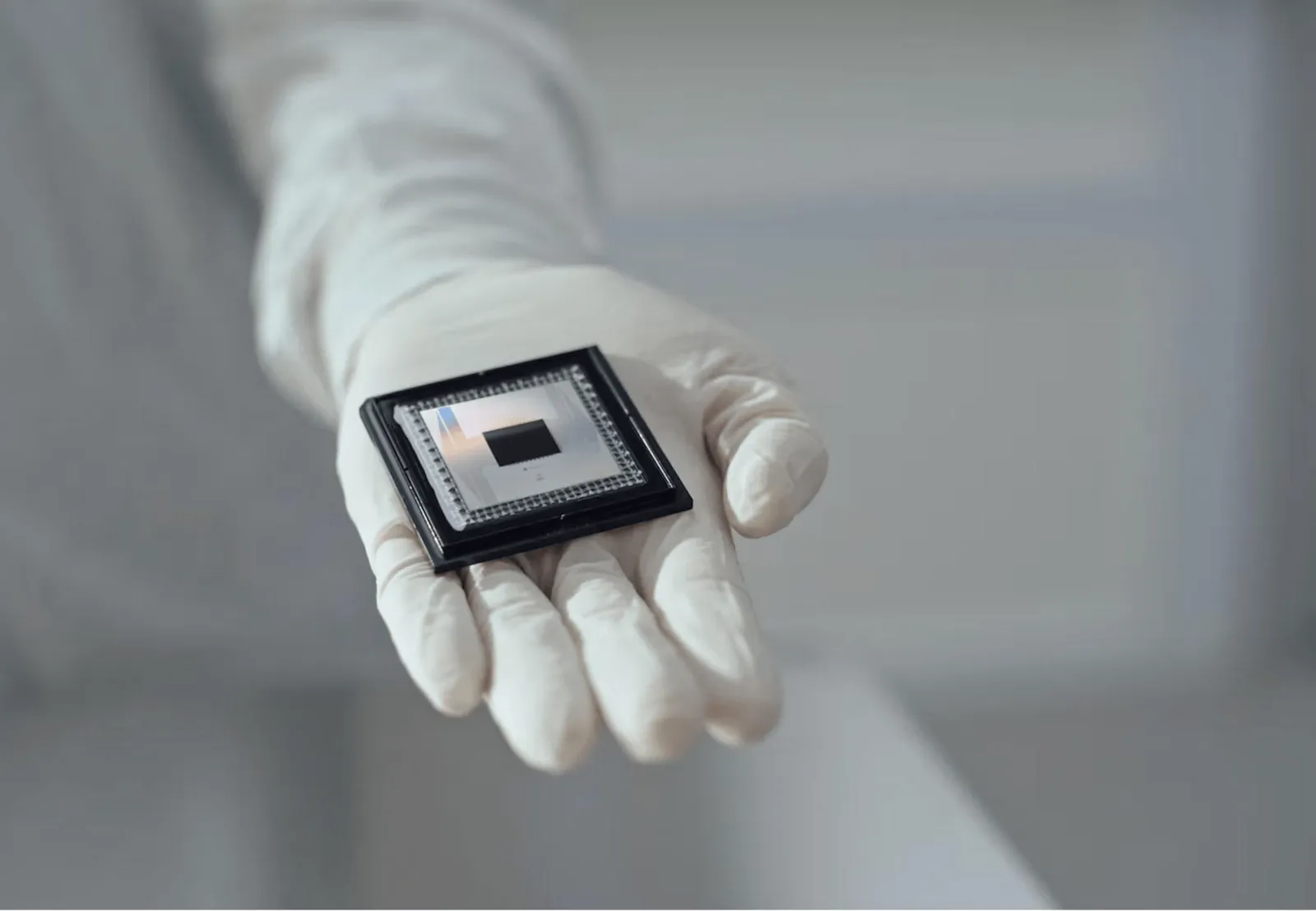
Willow was introduced by Google in December 2024. The processor contains 105 physical qubits and is used by the company to research scalable quantum error correction.
The new experiment confirms that magic state cultivation technology can work on real superconducting hardware.
The next task is to scale the method and increase the success rate.
Researchers also need to demonstrate that prepared states can be regularly transferred into larger protected computing circuits without significant loss of fidelity.
So far, Google has not announced specific timelines for the commercial application of this technology.
Nevertheless, the result is important for the entire industry. It shows that the development of quantum computers does not depend solely on increasing the qubit count. Error correction methods and ways to efficiently perform logical operations are becoming equally significant.
It is precisely these types of engineering solutions that are gradually transforming quantum computing from laboratory experiments into a technology capable of solving real-world problems.
If you are interested in AI, technology, and the future—welcome to my channel to discuss and share updates.
Translated from Russian. Original on vc.ru: Google научилась «выращивать» квантовые состояния. Ошибок стало в 40 раз меньше!